

Screens are part of everyday family life. They can keep a toddler occupied while dinner is being prepared, help relatives stay connected through video calls or offer caregivers a much-needed break. At the same time, parents may wonder how much screen time for babies and toddlers is appropriate and whether the recommendations they have heard still apply.
In January 2026, the American Academy of Pediatrics (AAP) released an updated policy statement on children’s digital media use. The new guidance looks beyond time limits alone by considering each child’s needs and how media fits into family life. The goal is not to make caregivers feel guilty or ask families to eliminate screens entirely. It is to help them make informed choices that work within everyday life.
What Infants and Toddlers Need Most
Babies learn by watching faces, listening to voices and discovering that their sounds or movements receive a response. As they begin crawling, walking and communicating, these back-and-forth experiences support language development and help children learn how to respond to their emotions. Frequently turning to a device during quiet or difficult moments can reduce opportunities to practice these skills with a trusted adult.
Supporting this development does not require carefully planned activities. Singing during a car ride, describing what is happening while preparing a meal or reading together for a few minutes can create meaningful moments of connection. As discussed in our guide to reading to babies and toddlers, children benefit from the conversation and shared attention surrounding a book, even when they do not sit through the entire story.
The Updated AAP Approach: The 5 Cs of Media Use
The updated AAP policy explains that digital media should not be viewed only through a child’s screen time or individual behavior. Media content, platform design and a child’s surrounding environment can all influence the experience. To help families look beyond minutes alone, the AAP recommends using the 5 Cs of Media Use:
- Child: Consider the child’s developmental stage and individual response to media. Content that works well for one child may be overstimulating or difficult for another.
- Content: Look at what the child is watching or using, not just how long the screen is on. Choose age-appropriate content that supports learning or connection. Avoid media that uses autoplay and other attention-grabbing features to encourage continued viewing.
- Calm: Notice when screens are being used to soothe difficult emotions. A device may help occasionally, but frequent use can replace opportunities for children to learn other ways to manage frustration with support from a caregiver.
- Crowding Out: Consider what media use may be replacing. Screen time becomes more concerning when it regularly takes the place of sleep, active play or face-to-face interaction.
- Communication: Talk about media and participate when possible. Watching together, responding to what is happening on the screen and modeling healthy device habits can make media use a more intentional part of family life.
Screen Time Guidance by Age
The 2026 AAP policy does not replace its earlier age-based recommendations with a new schedule of daily limits. Instead, it asks families to consider both the amount of screen time and how media is used. The following guidance combines AAP’s current recommendations for young children with that broader approach.
Younger Than 18 Months
The AAP recommends avoiding screen media other than video chatting with family or other trusted adults. During a video call, stay nearby to identify who is on the screen and help the baby participate in the conversation.
18 to 24 Months
Families who choose to introduce media should select high-quality content and watch it with their child. Talk about what is happening and connect it to familiar objects or experiences to help the child understand what they see.
Ages 2 to 3
Earlier AAP guidance recommended limiting screen use to about one hour per day for children ages 2 to 5. The updated policy encourages families to consider that amount alongside the content, the child’s response and what media use may be crowding out. Choose child-centered programming and remain involved whenever possible rather than treating the hour as the only measure of healthy screen use.
Why Toddlers Reach for Screens
Many digital platforms are built to capture attention. Autoplay and other attention-grabbing features encourage viewers to keep watching or interacting. For toddlers, who are still developing patience and emotional regulation, that immediate stimulation can make a device especially difficult to put down.
Toddlers can also learn to associate screens with certain moments, such as waiting at a restaurant or calming down after becoming upset. If a device is offered regularly in those situations, reaching for it can become an expected part of the routine. Crying or protesting when screen time ends is not necessarily defiance or a sign of addiction. It may mean the child has learned to expect the quick comfort or entertainment a screen provides. With clear expectations and consistent alternatives, caregivers can help build a different routine.
Simple Alternatives to Screen Time
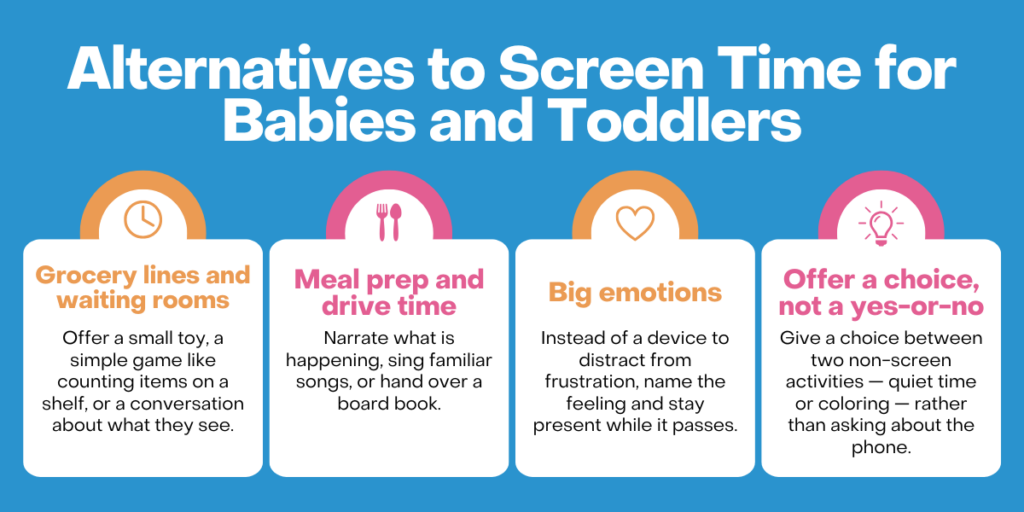
Replacing screen time does not require a complicated activity or a bag full of supplies. During grocery lines or appointments, caregivers can talk about nearby objects or bring a small toy reserved for outings. Car rides can become a time for familiar songs or audiobooks, while meal preparation offers opportunities to describe what is happening or let a toddler help with a safe task.
When a child is upset, try naming the feeling and remaining nearby instead of immediately offering a device as a distraction. During quiet time, offer a board book or another hands-on activity. Giving toddlers a choice between two screen-free activities can also help them feel involved in what happens next.
Tips for Realistic Family Screen Habits
Healthy screen habits do not have to mean removing every device from the home. Small changes can help families use screens more intentionally:
- Set expectations before screen time begins. Tell toddlers what they will watch and what will happen afterward. A consistent ending, such as turning off the screen after one episode, is easier to understand than an unexpected stop.
- Choose a shared screen when possible. If a child is going to watch something, a television in a common area may be a better choice than handing over a phone or tablet. A shared screen makes it easier for caregivers to follow the content and participate with their child. Music or an audiobook can also provide entertainment during car rides or household routines without requiring a child to watch a screen.
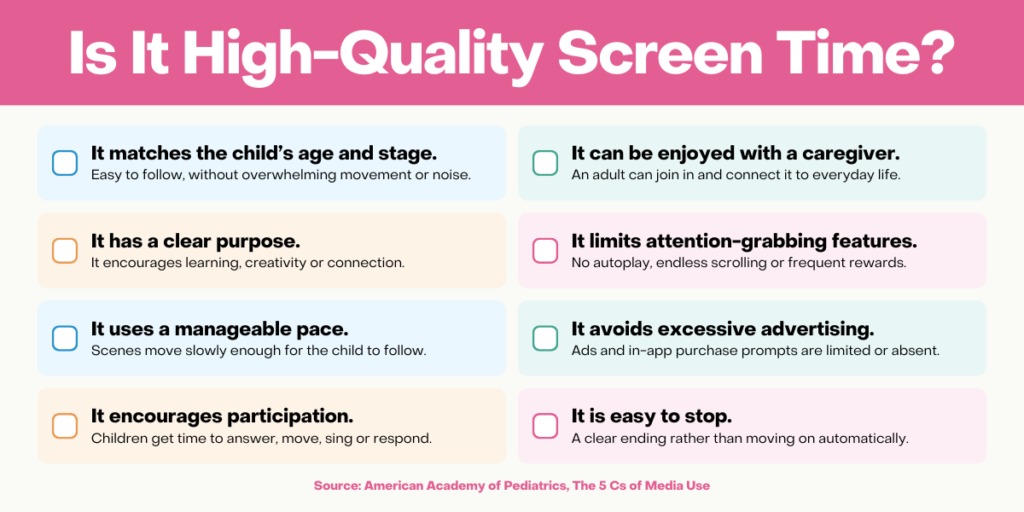
- Know what high-quality content looks like. Choose age-appropriate shows with a clear story or learning purpose. Apps and games should be simple enough for a young child to use with a caregiver and should encourage participation rather than repetitive tapping. Avoid excessive advertising, autoplay, in-app purchases and frequent rewards designed to keep children engaged.
- Pay attention to background media. A television playing in the room or an adult frequently checking a phone can interrupt conversation even when the child is not actively watching. Turn off screens that no one is using and put devices aside during activities that depend on interaction.
- Model the habits you want children to develop. Toddlers learn by watching the adults around them. When caregivers put their phones away to read, talk or participate in another activity, children see that screen-free time is part of everyday life. These boundaries are often easier to reinforce when they apply to the whole family.
- Ask other caregivers specific questions. When choosing a childcare facility or talking with a nanny, babysitter or relative, ask whether screens are used during the day, what children are allowed to watch and whether an adult participates. Parents can also ask how devices are used during meals or difficult transitions.
- Watch how your child responds. If ending screen time regularly causes intense distress or screen-related behavior does not improve with consistent limits, discuss those concerns with the child’s pediatrician.
How Kids Incorporated Supports Healthy Development
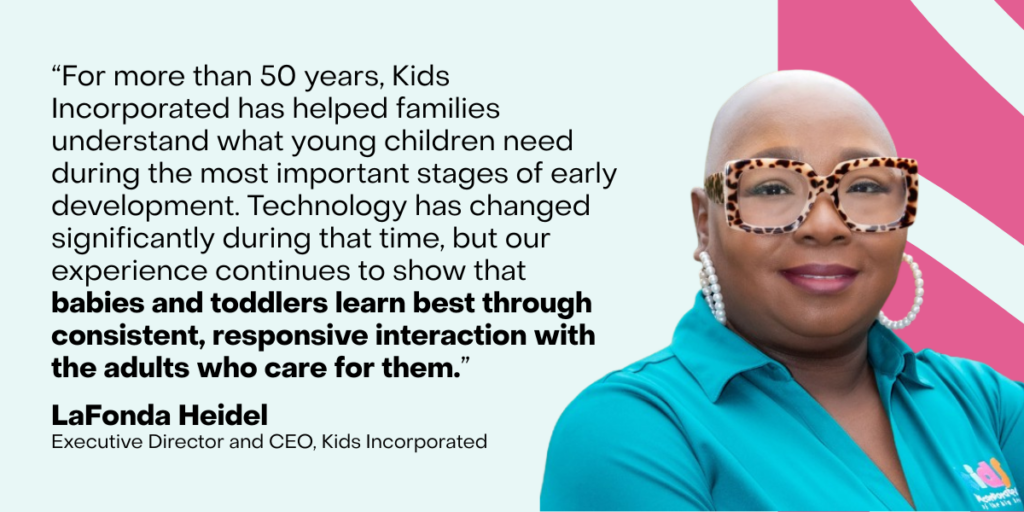
For more than 50 years, Kids Incorporated of the Big Bend has partnered with families to support children’s development during the earliest years of life. Through Early Head Start, family advocacy and other community-based programs, the organization provides screen-free learning environments centered on hands-on play and face-to-face interaction. Kids Incorporated also helps caregivers build routines that support language and social-emotional development at home. Learn more about Kids Incorporated’s programs or contact us at (850) 414-9800 to find the resources and support that are right for your family.