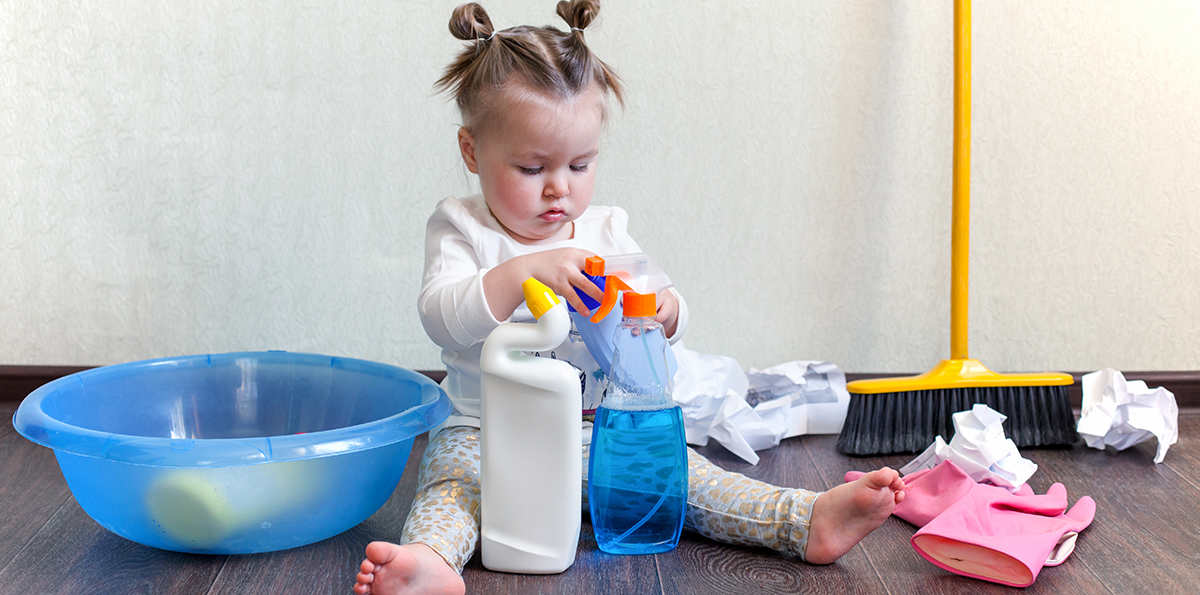
Babies and toddlers learn about the world around them by exploring, touching and often putting objects in their mouths. As they become more mobile and curious, everyday household items that may seem harmless can quickly become an accessible hazard.
Medications, vitamins, cleaning products and laundry detergent pods are among the potential poison risks caregivers may have around the home. Knowing where risks may be hiding and taking steps to keep hazardous products out of reach can help caregivers create a safer environment for young children.
Why Babies and Toddlers Are at Greater Risk
Babies and toddlers are naturally curious about their surroundings, but they do not yet understand which items may be dangerous. As they begin crawling, walking and reaching for new objects, products that were once inaccessible can suddenly be within reach.
Many common household products can pose a poisoning risk, including medications, vitamins and supplements, household cleaners and laundry detergent pods. Laundry pods can be particularly hazardous because their small size and bright colors can look like candy to young children, and vitamins and supplements are also especially dangerous due to their higher dosages. Poison Control reports more than 10,000 cases of laundry pod-related poisonings and more than 40,000 cases of vitamin toxicity annually.
Understanding which products may be dangerous and keeping them safely out of reach can help caregivers reduce these risks as babies and toddlers become more mobile and independent. If you are unsure whether a household product could be harmful, you can also search potential hazards on Poison.org to learn more about specific substances and products.
Store Household Products Safely
Poison prevention for babies and toddlers starts with keeping potentially dangerous products where young children cannot access them. A few consistent storage habits can help reduce the risk of accidental exposure:
- Keep household products out of reach. Store cleaning products, pesticides and other hazardous items on high shelves or in upper cabinets. If under-counter storage is necessary, use child safety locks.
- Read product labels. Check labels for warnings about potential hazards and follow instructions for safe use and storage.
- Secure medications and supplements. Keep medications, vitamins and supplements in a locked cabinet or lockable container rather than on countertops or in purses within a child’s reach.
- Be mindful when taking medications. When possible, avoid taking medications in front of young children, who often learn by imitating adults.
- Use more than one layer of protection. Child safety locks are not foolproof, so combining locks with high storage can make potentially dangerous products more difficult for young children to access.
Safely Dispose of Unused and Expired Medications
Caregivers can also reduce poison risks by removing medications that are no longer needed. Instead of keeping unused or expired medications in cabinets or drawers, which causes an unnecessary risk for children, caregivers can use community drug disposal programs to remove them safely. The U.S. Drug Enforcement Administration hosts National Prescription Drug Take Back Day twice a year, offering collection sites where people can drop off medications for safe disposal.
Manage Poison Risks With Guests and While Traveling
Poison prevention can become more complicated when guests visit or when families spend time away from home. Visitors may bring purses, bags, medications and personal care products into a childproofed home without realizing that these items could be accessible to a baby or toddler. Give guests a secure place to store their belongings, such as a high shelf or designated area that children cannot reach.
When visiting friends or family members, especially homes where young children do not regularly stay, ask whether medications and hazardous products are stored securely and request that accessible items be moved temporarily. For overnight trips and hotel stays, caregivers can also bring a lockable container for medications and supplements rather than relying on the storage available at the destination.
Check Your Home Room by Room
Potential poison risks can be found throughout the home, so it can be helpful to look at each room from a baby or toddler’s perspective. As children become more mobile, caregivers should regularly check areas that were previously out of reach and move hazardous products when necessary.
- Kitchen and laundry areas: Keep cleaning products in upper cabinets or locked lower cabinets. Store laundry detergent pods in their original container in a high, secure location.
- Bathrooms: Keep medications, vitamins, supplements and potentially harmful personal care products in a locked cabinet or on a high shelf. Avoid leaving these items on counters or in bags on the floor.
- Garage and utility areas: Store pesticides, motor oil and other chemicals on high shelving or in locked cabinets. Keep hazardous products in their original, labeled containers.
- Common areas: Check under furniture, on low tables and in other areas where medications or hazardous items may have been left within reach. Make sure purses and bags are stored somewhere children cannot access them.
For an easy way to remember what to check throughout your home, download our room-by-room poison prevention safety checklist.
Be Prepared in Case of a Poisoning Emergency
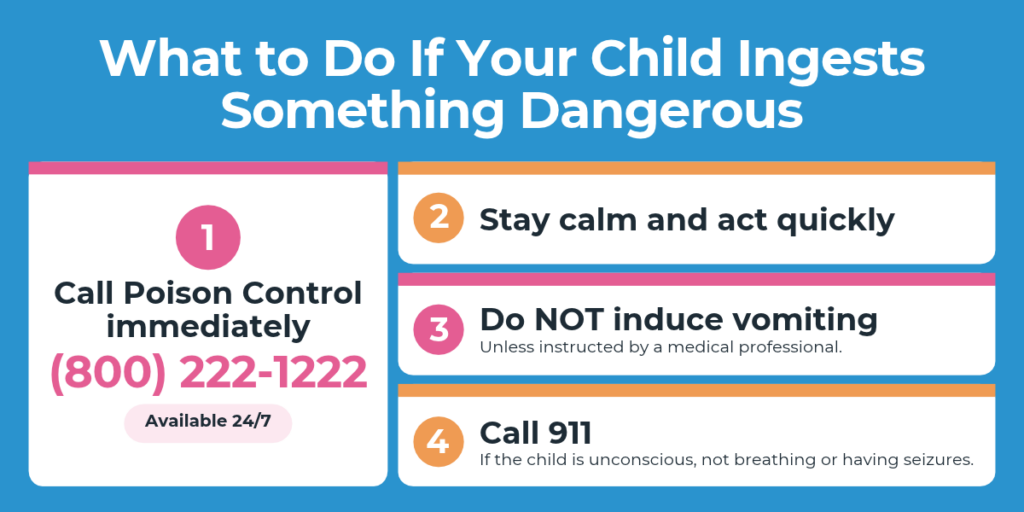
Even with prevention measures in place, caregivers should know where to turn if a baby or toddler may have been exposed to something harmful. If you suspect your child has ingested something dangerous, call Poison Control right away and do not induce vomiting unless instructed by a medical professional. Save the Poison Control number, (800) 222-1222, in every caregiver’s phone and post it somewhere easy to find in the home. Poison Control is available 24 hours a day, seven days a week, to provide guidance based on the specific situation.
If your child is unconscious, not breathing or having seizures, call 911 immediately.
Frequently Asked Questions
What household items are common poisoning risks for babies and toddlers?
Common risks include medications, vitamins and supplements, household cleaners, laundry detergent pods, pesticides and other chemicals. Caregivers should consider anything a young child could swallow, touch or open when checking the home for potential hazards.
What should I do if I’m not sure if something is poisonous?
Poison.org allows caregivers to search for information about specific substances and potential hazards. If you think your child may have been exposed to something harmful, call Poison Control at (800) 222-1222 for guidance.
Are child-resistant containers enough to keep medications safe?
Child-resistant packaging can add a layer of protection, but medications, vitamins and supplements should still be stored in a locked cabinet or container that babies and toddlers cannot reach.
How often should I check my home for potential poison hazards?
Check regularly, especially as your child becomes more mobile and can reach new areas. It is also helpful to do a quick sweep for items that may have been left on counters, under furniture or in other places a child could access.
Supporting Healthy, Safe Development With Kids Incorporated
Creating a safe environment is an important part of supporting a child’s healthy development during the first years of life. Kids Incorporated works alongside families providing early learning opportunities and connecting parents and caregivers with resources to help their children grow and thrive.
Through its programs and family resources, Kids Incorporated helps parents and caregivers build a strong foundation for their children’s development and well-being. Contact us at (850) 414-9800 to learn more about Kids Incorporated’s programs and the resources available to families in our community.
DISCLAIMER: This article is for informational purposes only and is not intended to replace professional medical advice. If you or your child are experiencing a medical emergency, call 911 immediately.