Parents and caregivers are always looking for simple ways to support their child’s growth and development, especially during the first few years of life. With so much information about milestones, learning activities and screen time, it’s easy to wonder whether you’re doing enough. The good news is that one of the most meaningful ways to encourage healthy development doesn’t require expensive toys or elaborate lesson plans. The American Academy of Pediatrics recommends reading aloud every day beginning at birth because reading to babies and toddlers helps build important early skills, strengthens the bond between caregivers and children and creates opportunities to learn together through everyday moments. Whether you’re expecting your first child, caring for a newborn or chasing an energetic toddler, understanding what to read at each stage and how story time can complement today’s technology can help lay the foundation for a lifelong love of reading.
Why Reading to Babies and Toddlers Matters
Story time begins earlier than many people realize. A study published in the Proceedings of the National Academy of Sciences found that prenatal auditory experiences have a measurable influence on a baby’s ability to distinguish language sounds after birth, making pregnancy a meaningful time to begin reading aloud. But whether you’re reading before your child is born or sharing a favorite board book with your toddler, the greatest benefit comes from creating consistent moments of connection. Reading together throughout the day helps children hear new words, experience the rhythm of language and associate books with comfort, curiosity and quality time with the people who care for them most.
What Story Time Does for a Developing Brain
Reading to babies and toddlers supports development in many ways, even before children begin speaking. Story time can help:
- Build language and vocabulary by exposing children to new words and sentence patterns before they can speak.
- Strengthen listening, attention and memory as children learn to focus, follow along and remember familiar stories.
- Develop social and emotional skills through shared attention, facial expressions, voice inflection and caregiver interaction.
- Lay the foundation for early literacy by introducing concepts like rhyming, storytelling and the connection between spoken and written words.
- Build confidence through repetition, as reading favorite books again and again helps children recognize words, anticipate what comes next and deepen comprehension.
Story Time at Every Stage
Before Birth
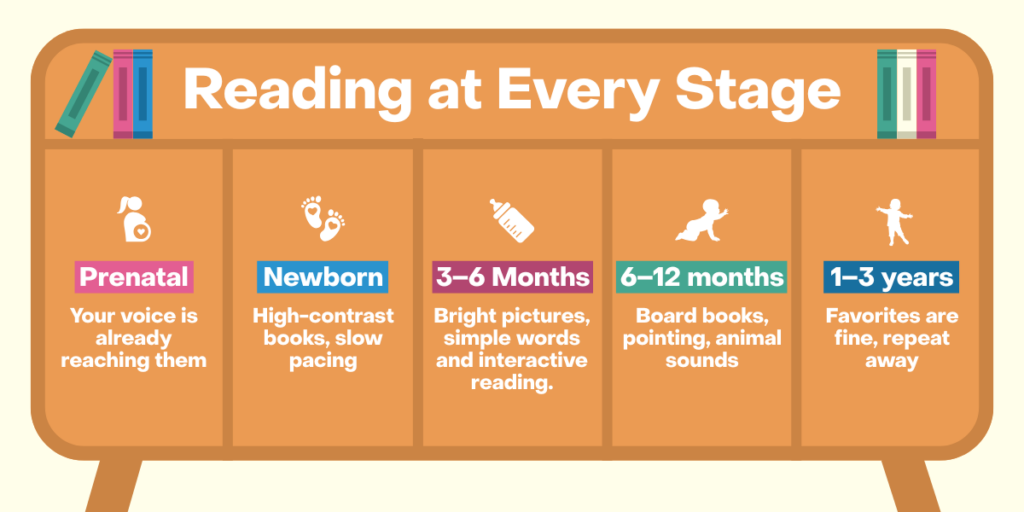
Story time can begin before your baby is born. Research suggests babies begin hearing sounds during pregnancy, making this a great time to build the habit of reading aloud. Don’t worry about choosing the “right” book. Novels, devotionals, magazines, children’s books or even your favorite recipes all allow your baby to hear the rhythm and familiarity of your voice. The goal isn’t the content; it’s creating moments of connection and establishing a routine that can continue after birth.
Newborns (0–3 Months)
At this stage, babies are learning through sight and sound. Books with high-contrast images, simple patterns and large pictures are easiest for newborns to focus on, while your voice helps capture their attention. Read slowly, make eye contact and don’t worry if you only make it through a few pages. Even a few minutes of reading together supports early development.
Babies (3–6 Months)
As babies become more alert and engaged, story time becomes increasingly interactive. Choose board books with bold colors, simple illustrations, familiar faces and repetitive words or sounds to capture their attention. Hold the book where your baby can easily see the pictures, point to objects as you name them and pause to smile, laugh or respond to their coos and babbles. At this age, story time is less about finishing the book and more about enjoying the back-and-forth interaction together.
Babies (6–12 Months)
As babies become more curious, they enjoy sturdy board books with bright pictures, familiar objects, simple words and repetitive phrases. Point to pictures, name everyday objects and make animal sounds to encourage interaction. It’s also perfectly normal for babies to grab the book, turn pages out of order or mouth the corners as they explore.
Toddlers (1–3 Years)
Toddlers often develop favorite books and ask to hear them again and again. Rereading familiar stories helps children build vocabulary, strengthen comprehension and gain confidence. Choose books with simple stories, rhyming words, predictable patterns and opportunities for participation. Encourage your toddler to point to pictures, finish familiar phrases or tell you what they see on each page.
Preschoolers (3–5 Years)
As children approach preschool age, choose books with longer stories, engaging characters, simple plots and opportunities to ask questions about what happens next. Encourage your child to predict what will happen, retell the story in their own words and connect the characters’ experiences to everyday life. These conversations help strengthen vocabulary, critical thinking and early literacy skills while keeping reading fun.
Every Family Can Enjoy Story Time
Story time doesn’t require perfect reading skills. If you’re more comfortable speaking another language, reading and talking with your child in your home language supports language development and strengthens your bond. Families with limited literacy can tell stories from memory, describe pictures, ask questions about what they see or simply talk through each page together. The conversation and shared interaction matter just as much as reading every word.
If you’re looking for free books and story time opportunities, your local library is a great place to start. Families in the Tallahassee area can explore story times, early literacy programs and children’s resources through the LeRoy Collins Leon County Public Library System. Libraries across the country also offer similar programs that encourage a lifelong love of reading.
Story Time Tips for Busy Families
Whether you read before bed, during breakfast or while waiting for an appointment, consistency matters more than length. These simple ideas can help make reading to babies and toddlers an enjoyable part of your family’s routine:
- Start with just five minutes a day. Short, consistent reading sessions add up.
- Use expressive voices and facial expressions to keep young children engaged.
- Let your child participate by turning pages, pointing to pictures or finishing familiar phrases.
- Act out the story by making animal sounds, pretending to be characters or using simple movements.
- Keep favorite books in rotation. Reading the same story over and over helps build language and confidence.
- Visit your local library for free books, story times and early literacy programs that introduce new stories without adding to your family’s budget.
- Balance story time with screen time. Educational apps and videos can reinforce learning, but reading together provides face-to-face conversation, shared attention and opportunities to ask questions that help build language and strengthen your bond.
Recommended Books for Every Stage
You don’t need an extensive home library to build a love of reading. A few well-loved books that match your child’s developmental stage can help make story time engaging and enjoyable. If these titles aren’t available at home, check your local library for free copies or ask a librarian for similar recommendations.
Before Birth
Newborns (0–3 Months)
Babies (3–6 Months)
Babies (6–12 Months)
- “Brown Bear, Brown Bear, What Do You See?” by Bill Martin Jr. and Eric Carle
- “Moo, Baa, La La La!” by Sandra Boynton
Toddlers (1–3 Years)
- “The Very Hungry Caterpillar” by Eric Carle
- “Chicka Chicka Boom Boom” by Bill Martin Jr. and John Archambault
Preschoolers (3–5 Years)
Frequently Asked Questions
When should I start reading to my baby?
It’s never too early to begin. Babies can hear sounds before birth, making pregnancy a great time to establish a reading routine. After birth, even a few minutes of reading aloud each day helps support language development and strengthens the bond between you and your child.
What kinds of books are best for babies and toddlers?
The best books depend on your child’s age. Newborns enjoy books with high-contrast images and simple patterns, while older babies benefit from sturdy board books with bright pictures, repetitive words and familiar objects. Toddlers often love rhyming stories, predictable text and books they can help “read” by pointing to pictures or finishing phrases.
What if my child won’t sit still during story time?
That’s completely normal. Young children often learn while moving, exploring and interacting. Let your child hold the book, turn pages, point to pictures or move around while you continue reading. Story time doesn’t have to look perfect to be effective.
Does reading still matter if my child uses educational apps or watches videos?
Yes. Educational media can be part of a balanced routine, but reading together offers something unique: responsive interaction with a trusted caregiver. Talking about the story, asking questions and sharing attention help support language, communication and social-emotional development in ways screens alone cannot.
What if I’m not a confident reader or English isn’t my first language?
Story time is about spending time together, not reading every word perfectly. Reading in your home language, telling stories from memory, describing pictures or talking about what you see on each page all help build your child’s language skills and strengthen your relationship.
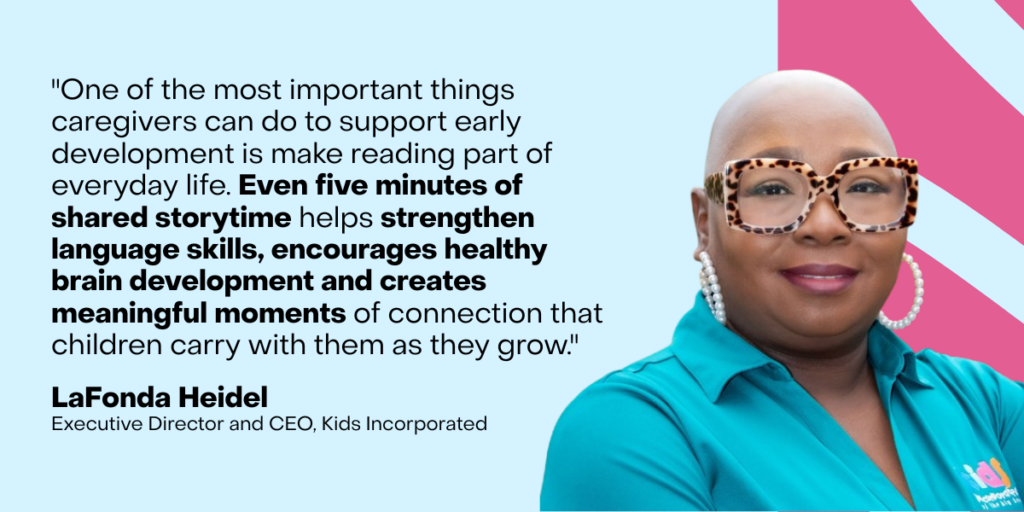
How Kids Incorporated Supports Early Learning
For more than 50 years, Kids Incorporated of the Big Bend has partnered with families to support children’s learning and development during the earliest years of life. Through Early Head Start, family advocacy and other community-based programs, the organization helps caregivers build strong foundations for language, literacy and school readiness from the very beginning. Learn more about Early Head Start and Kids Incorporated’s other programs, or contact us at (850) 414-9800 to find the resources and support that’s right for your family.